
Luxury Home Design in Melbourne: Trends (and What Will Date Quickly)
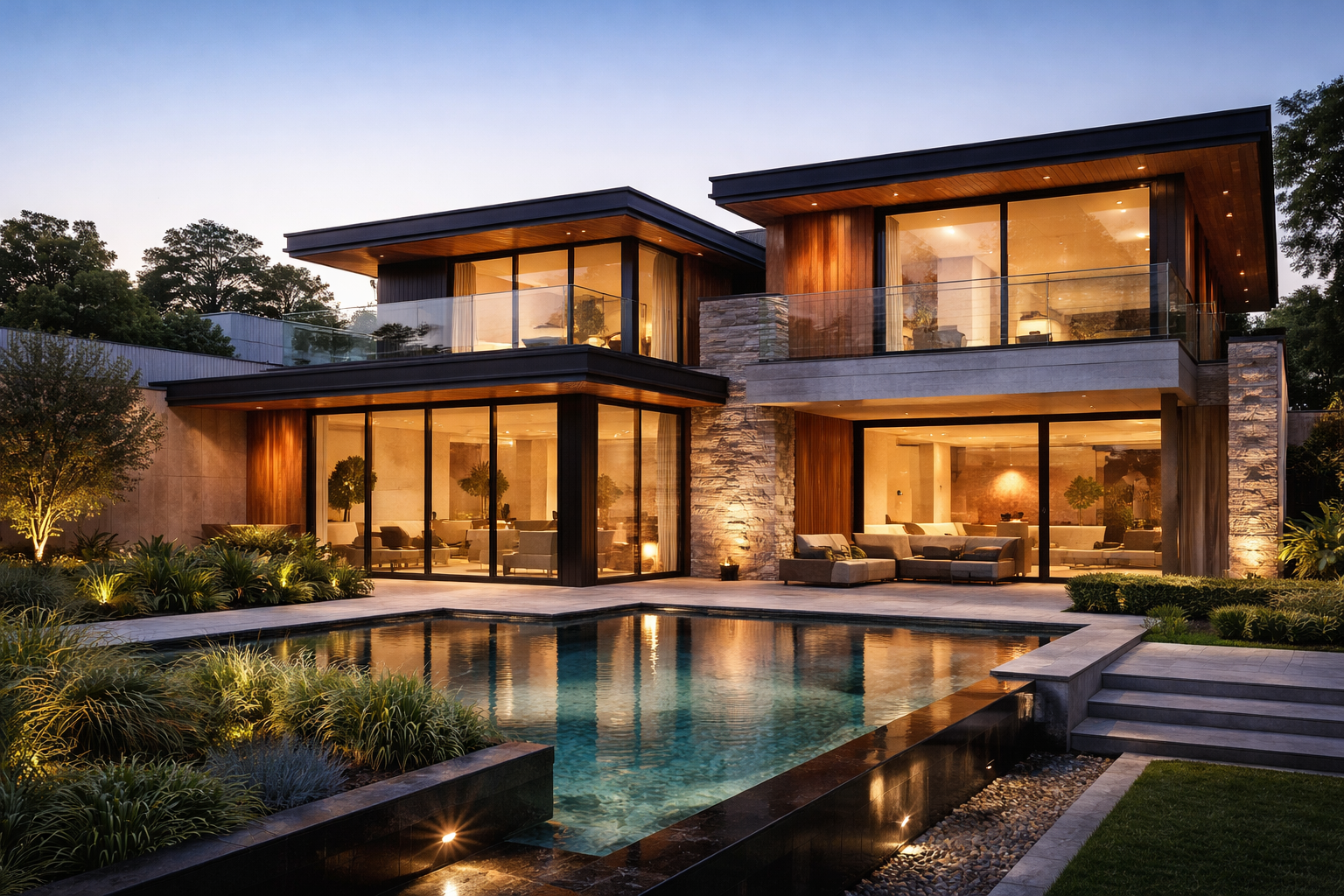
Luxury home design Melbourne clients are commissioning today looks very different to what defined prestige homes even a decade ago. True luxury is no longer about excess, imported styles, or oversized rooms. It is about clarity of planning, material integrity, sustainability, and architecture that responds intelligently to site and lifestyle.
For homeowners planning a bespoke custom home or major renovation, the real question is not “What is trending right now?” It is “What will still feel refined, relevant and valuable in fifteen years?”
Below is a design-led perspective on the trends shaping luxury home design in Melbourne, and the features most likely to date quickly.
Warm Minimalism in Luxury Home Design Melbourne
Minimalism remains influential in high-end home design Melbourne projects, but it has evolved. The stark white boxes of the early 2010s have given way to warmer, layered interiors grounded in natural materials.
Stone with movement and depth. Timber with character. Textured plaster, brushed metals, soft architectural lighting. These homes feel calm and restrained, yet rich in sensory detail.
This approach lasts because it is based on proportion, light, and material honesty rather than a single colour palette. It aligns with broader architectural thinking around climate-responsive and sustainable design principles supported by the Australian Institute of Architects.
What will date quickly is overly glossy minimalism with no warmth. High-shine finishes and sterile palettes tend to feel cold and trend-driven once the novelty fades.
For examples of refined material-led architecture, explore our Architectural Design Melbourne portfolio.
Indoor Outdoor Living Designed for Melbourne Conditions
Seamless indoor outdoor connection is now expected in luxury home design Melbourne projects. Large sliding systems, landscaped courtyards, protected terraces and integrated outdoor kitchens are increasingly common in high-end custom homes.
However, the difference between timeless design and a short-lived trend lies in environmental logic. Orientation, shading, prevailing winds and privacy must inform the design from the earliest concept stage.
A well-resolved indoor outdoor strategy enhances daily living and long-term property value. Poorly considered glazing, unshaded western exposures, or token alfresco areas designed purely for appearance will age quickly and perform poorly.
Our approach to Residential Design integrates climate, planning constraints and lifestyle into the architectural framework from the outset.
Sculptural Forms and Curved Architecture
Curved walls, arched openings and softened transitions are re-emerging in luxury residential design Melbourne homeowners are embracing. When integrated into the architectural concept, these forms improve circulation, soften spatial flow and introduce sculptural quality.
Used selectively and with structural intent, curves can become defining features of a home.
What will date quickly is decorative application. Random arches inserted into otherwise rectilinear layouts often feel like surface styling rather than architecture. Without a clear spatial rationale, they risk becoming a short-lived design statement.
Concealed Functionality and Intelligent Joinery
True luxury is increasingly about calm. Integrated storage, concealed appliances, hidden services and walk-in sculleries allow primary living areas to remain uncluttered and composed.
In bespoke home design Melbourne projects, this level of refinement must be resolved during design development, not left to chance during construction. Strategic documentation prevents compromises later and protects the integrity of the architectural vision.
As discussed in Custom Home Design vs Documentation, design depth directly influences build quality and outcome.
Open shelving everywhere, on the other hand, is a trend that rarely ages well. While visually appealing in styled photography, fully exposed kitchens and living spaces can feel chaotic in everyday life.
Sustainability as a Baseline in High-End Home Design Melbourne
Sustainability is no longer an optional upgrade in luxury home design Melbourne projects. Passive solar orientation, cross ventilation, thermal mass, high-performance glazing and energy-efficient systems are now baseline expectations in premium residential architecture.
This shift reflects both environmental responsibility and long-term value. Homes that perform well thermally are more comfortable, more efficient and more desirable in the market.
What will date quickly are superficial sustainability gestures. A few add-on features cannot compensate for poor orientation or inefficient planning. In high-end residential design, environmental performance must be embedded in the architecture itself.
Site-Responsive, Personalised Architecture
The most enduring luxury homes in Melbourne are deeply responsive to their site. They consider slope, outlook, heritage context, neighbourhood character and client lifestyle in equal measure.
Bespoke home design Melbourne families commission should never feel generic. It should reflect the specific constraints and opportunities of the land and the people who will live there.
This is where the distinction between boutique design studios and volume drafting services becomes clear. The difference lies not just in documentation, but in how a home is conceived and refined from the first sketch.
Our perspective on Building Designers in Melbourne outlines this difference in greater detail.
Copy-and-paste luxury, particularly imported styles that ignore Melbourne’s climate and planning framework, is far more likely to feel dated within a few years.
Moody Interiors with Balanced Natural Light
Richer palettes and moodier interiors are increasingly popular in high-end custom homes. Deep stone, darker timbers and dramatic lighting can create sophisticated and intimate spaces when balanced with generous natural light.
In luxury residential design Melbourne projects, daylight strategy is critical. Skylights, carefully positioned windows and internal courtyards prevent darker interiors from feeling heavy.
Overly dark homes without sufficient daylight or cross ventilation are unlikely to age well, regardless of how impressive they appear in staged photography.
What Truly Defines Luxury Home Design Melbourne
Across all these trends, the consistent theme is restraint. Proportion, orientation, detailing and material quality matter more than novelty. Homes designed around a clear architectural concept tend to age gracefully because they were never dependent on short-term fashion.
Luxury home design Melbourne clients invest in should feel resolved from feasibility through to construction. That requires thoughtful planning, detailed documentation and close collaboration with consultants and builders.
The most successful high-end homes are not designed for social media. They are designed for daily life, longevity and architectural integrity.
Frequently Asked Questions
What defines luxury home design in Melbourne today?
Luxury home design Melbourne projects are defined by intelligent planning, site responsiveness, high-performance construction and refined detailing rather than decorative excess.
How is a luxury home designer different from a draftsman?
A luxury home designer focuses on architectural concept, spatial quality, environmental performance and long-term value. Drafting services typically document pre-determined layouts rather than leading the design strategy.
Is sustainability essential in high-end residential design Melbourne projects?
Yes. Passive solar design, insulation, glazing performance and energy efficiency are now fundamental in premium custom homes.
Are open plan layouts still popular in luxury homes?
Yes, but they are more controlled. Zoned openness with subtle separation, acoustic awareness and clear sightlines performs better than completely open layouts.
Will curved architectural elements date quickly?
Not when integrated into the overall concept. They become dated when applied as decorative features without structural or spatial logic.
How long does it take to design a luxury custom home in Melbourne?
Timeframes vary, but thorough design development, planning approvals and documentation commonly require several months before construction begins.
Is indoor outdoor living still important in Melbourne homes?
Absolutely. When oriented and shaded correctly, indoor outdoor integration enhances lifestyle and long-term property value.
How can I avoid building a home that feels dated in ten years?
Prioritise proportion, natural light, environmental performance and high-quality materials over short-term design trends.
Do I need an architect or a building designer for a high-end home?
The right choice depends on your project scope and goals. A boutique building design studio can deliver architect-level outcomes with a collaborative and design-led process.
Considering a Luxury Custom Home in Melbourne?
If you are planning a bespoke custom home or major architectural renovation and want a design-led approach grounded in longevity, our studio would welcome a conversation.
View recent high-end projects in our Gallery.
Or contact Sketch to arrange an initial consultation.
Luxury is not about excess. It is about clarity, confidence and creating a home that will still feel relevant, refined and rewarding decades from now.